
Most city forecasts fail because they picture the future as a skyline.
That is usually the wrong frame.
Temple in 2040 probably will not feel radically different because of one iconic tower, one startup district, or one ribbon-cutting. It will feel different because a long list of quieter systems will have changed at once: freight routing, utility planning, healthcare workflows, industrial power demand, water management, traffic timing, security expectations, and the operating speed local businesses are forced to match.
In other words, Temple 2040 is not mainly a design question. It is an infrastructure compounding question.
If the current direction holds, the city people experience in 2040 may be more connected, more capable, and more economically relevant than the Temple many residents grew up with. It may also be more expensive, more contested, and more dependent on invisible systems the public rarely sees until they fail.
That is why the useful question is not, "Will Temple become a technology city?" The better question is, "What will daily life feel like if today's power, land, logistics, healthcare, and automation choices keep stacking for fifteen years?"
Facts
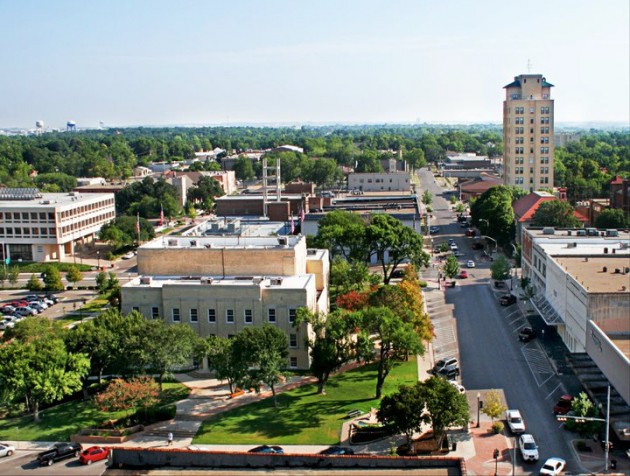
Temple is already sitting inside several overlapping infrastructure stories.
Texas is not debating AI as a software trend anymore. It is debating AI as physical infrastructure. The International Energy Agency said in its April 10, 2025 report Energy and AI that data centers are becoming a major source of new electricity demand and that AI growth will have system-level consequences for power planning, affordability, security, and emissions. That matters locally because once AI becomes an electricity-and-land story, cities like Temple stop being peripheral.
ERCOT now treats very large new loads as a special planning category. Its current large-load documentation says entities seeking to connect a load facility of 75 megawatts or greater must use the Batch Zero large-load process. That threshold is useful because it shows what kind of projects Texas is now preparing for. These are not normal office buildings. They are closer to industrial-scale infrastructure with consequences for substations, transmission, backup systems, construction labor, and long-term utility planning.
Temple has already appeared in public reporting tied to that larger buildout. On December 17, 2025, MySA reported that a roughly $197 million, 145,000-square-foot data center was planned at 2230 Eberhardt Road in Temple, with Meta listed as beneficial owner in a Texas Department of Licensing and Regulation filing. The same report said Temple City Council had approved a separate annexation and zoning request in late September 2025 for a Rowan Digital Infrastructure campus on more than 700 acres on the city's south side.
Some of the technologies people treat as "future" are already operating in Texas. Amazon's Prime Air service has been delivering packages by drone in College Station, and autonomous trucking companies have moved from testing to commercial driverless freight operations on Texas corridors such as Dallas-Houston. Temple does not need to invent these systems from scratch for them to affect local expectations. It only needs to sit close enough to the same freight, power, and regulatory currents.
Analysis
The forces shaping Temple are not mysterious.
Temple sits on I-35 in a region where freight, healthcare, warehousing, commuting, and regional growth already overlap. It has enough scale to matter, but not so much density that every major project is impossible. It is close enough to Austin, Waco, Killeen, Fort Cavazos, and the broader Central Texas corridor to benefit from regional momentum without being priced like the core of a major metro.
That position makes Temple legible to companies thinking in systems. If you are building power-intensive infrastructure, you do not only ask whether a city has tech vibes. You ask whether land can be assembled, whether utilities can scale, whether roads can handle construction, whether fiber can be extended, whether emergency response can adapt, whether regulators are predictable, and whether the community will fight every step of the process after the public hearing is over.
Temple is interesting because it is large enough to support serious infrastructure and small enough that each major decision still changes the city's character.
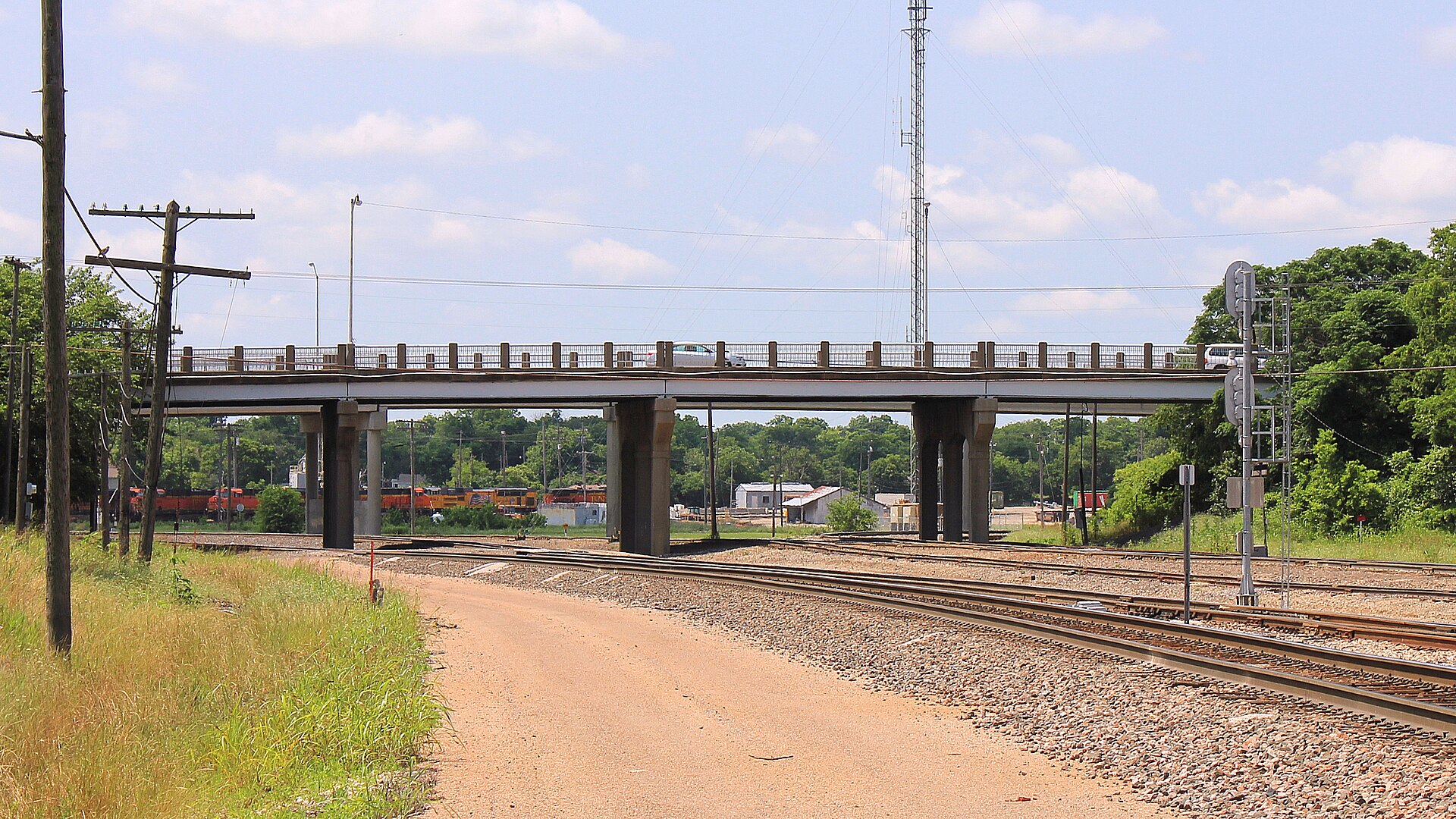
If more digital infrastructure lands in or near Temple, the change will likely spread outward in layers. One layer is logistics. Freight movement will become more software-directed, more timed, and more integrated with warehouse scheduling, inventory systems, and eventually more autonomous long-haul movement. Temple may not become a robotaxi city before it becomes a better-or-worse freight coordination city.
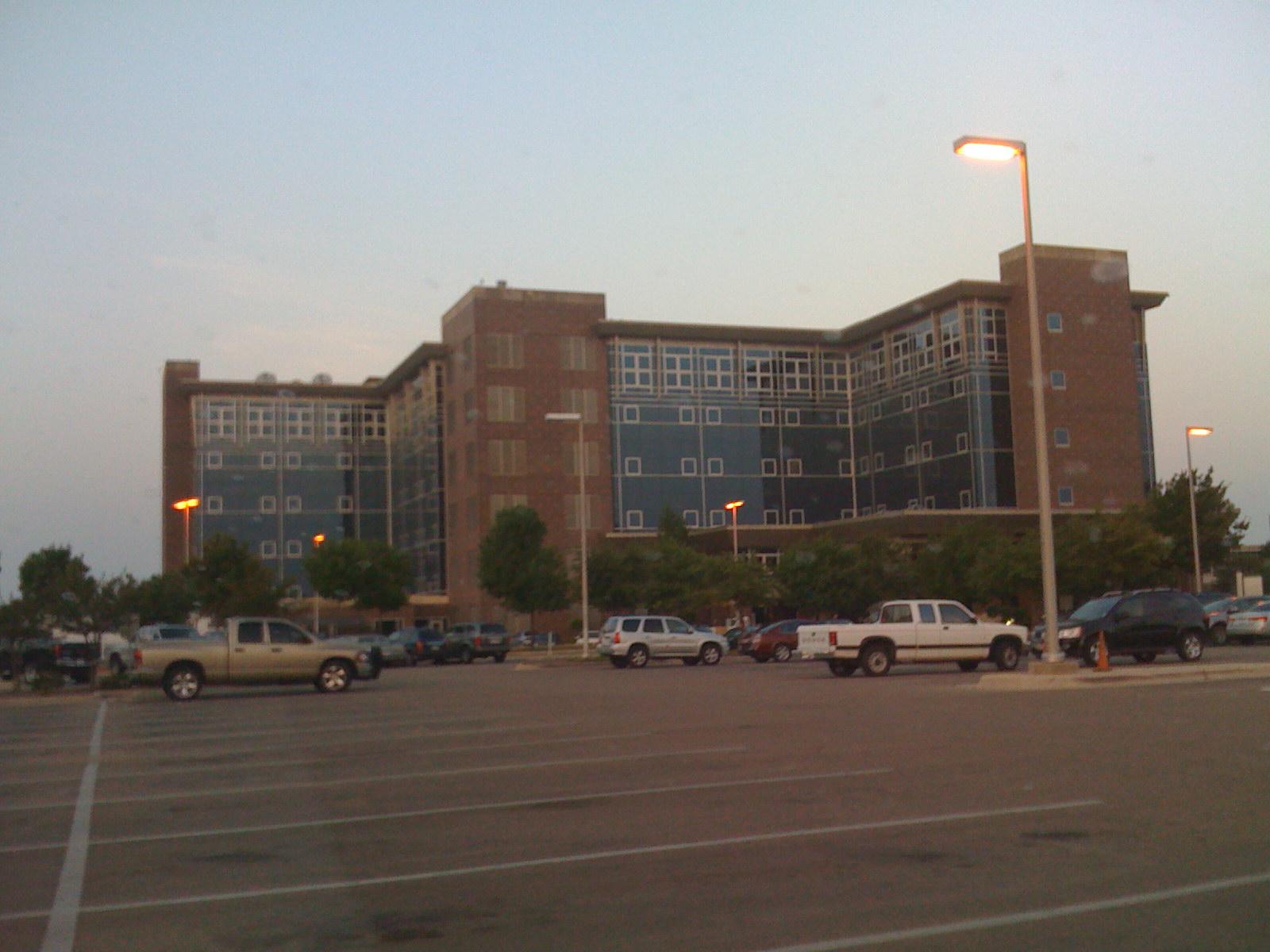
Another layer is healthcare. Temple is already a regional medical center, and healthcare is one of the sectors most likely to absorb AI through documentation, imaging support, scheduling, triage, coding, remote monitoring, and operational planning before the public notices any dramatic consumer-facing change.
Temple 2040 should not be pictured as a sudden leap into a clean futuristic city. It is more likely to look like a city where ordinary systems got smarter, stricter, and less forgiving all at once.
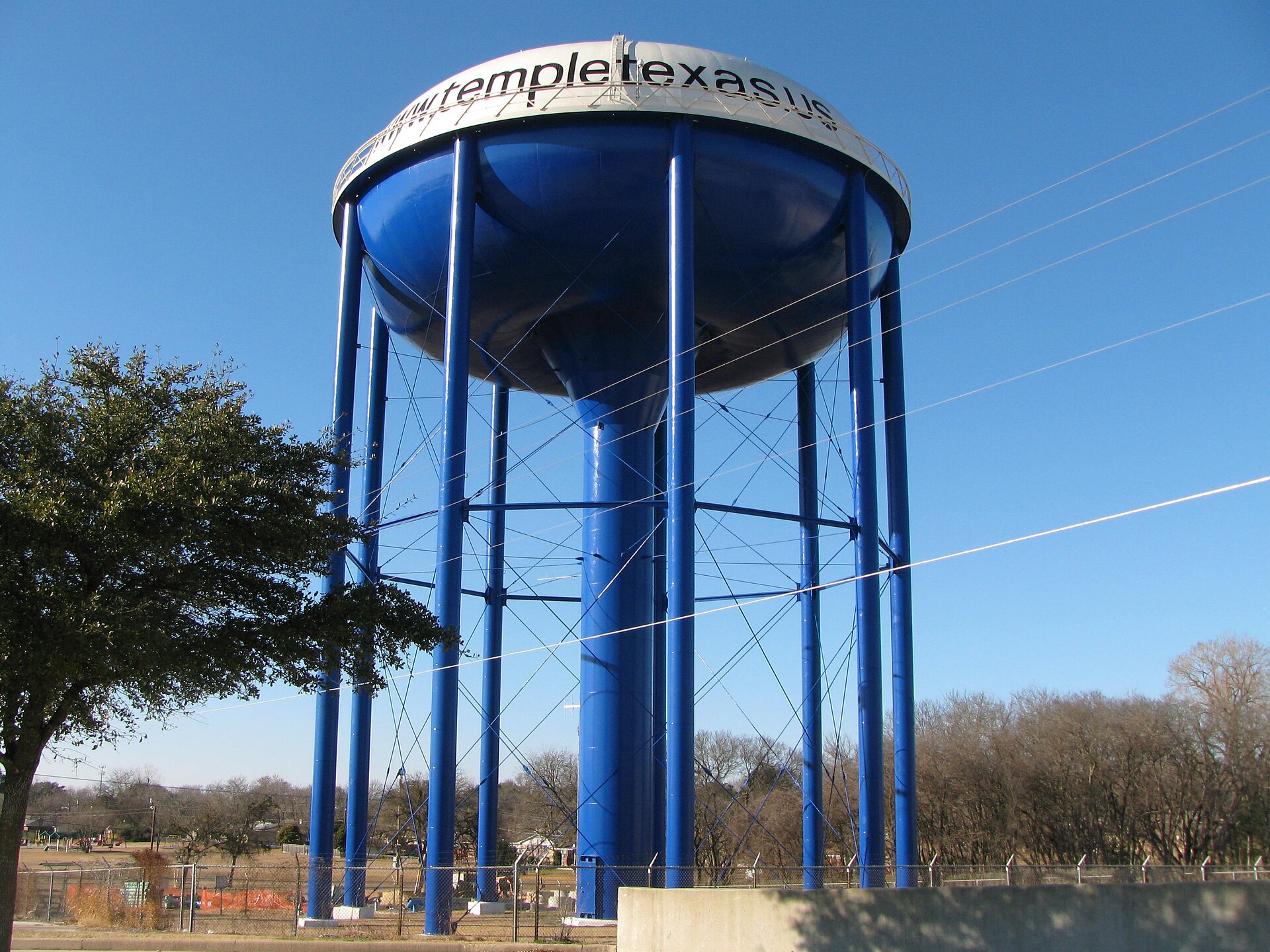
Another layer is utilities. Data centers, advanced manufacturing, distribution facilities, and digitally managed public services all put more pressure on substations, backup systems, water planning, and maintenance. The public debate often asks whether a city gets a project. The harder question is what utility obligations the city inherits after the deal is signed.
Then there is the business layer. Small and mid-sized local firms will increasingly be expected to match the operating speed of larger software-heavy organizations. Faster quoting, better scheduling, tighter delivery windows, more digital compliance, and more predictive maintenance will stop being optional advantages and start becoming baseline requirements.
Forecast
My forecast is that Temple in 2040 will feel more coordinated and more constrained at the same time.
The coordinated part is the optimistic version. Traffic signals may be more adaptive. Transit and paratransit may be more on-demand and app-mediated. More freight movement may be routed around timing, congestion, and network visibility rather than static schedules. Hospitals may move patients and paperwork through systems that feel less like paperwork factories and more like continuously optimized operations. Utilities may rely more on remote sensing, predictive maintenance, and tighter load management.
But there is a more difficult side to the same future. A city that becomes more software-coordinated also becomes more dependent on systems that are hard for ordinary residents to inspect. The public may experience the future less as convenience and more as a series of quiet pressures: higher expectations, more surveillance, more utility conflict, more land-use tension, and less tolerance for infrastructure bottlenecks.
That is why my base-case Temple 2040 forecast is not "Temple becomes Austin." It is that Temple becomes a more important mid-sized infrastructure city whose identity is shaped by invisible systems as much as visible buildings.
In the better version of that future, Temple uses the next decade to demand real terms. It asks who pays for power upgrades, what gets disclosed about water demand, how local contractors participate, what resilience standards apply during drought or grid stress, what public reporting follows approval, and how automation in public-facing systems can be audited instead of merely purchased.
In the worse version, Temple accepts growth mostly in headline form. It hears capital-investment numbers, construction-job numbers, and innovation language, but does not force clear operating terms into the public record. In that future, residents get a more expensive and more infrastructure-heavy city without gaining much clarity or leverage over what was built.
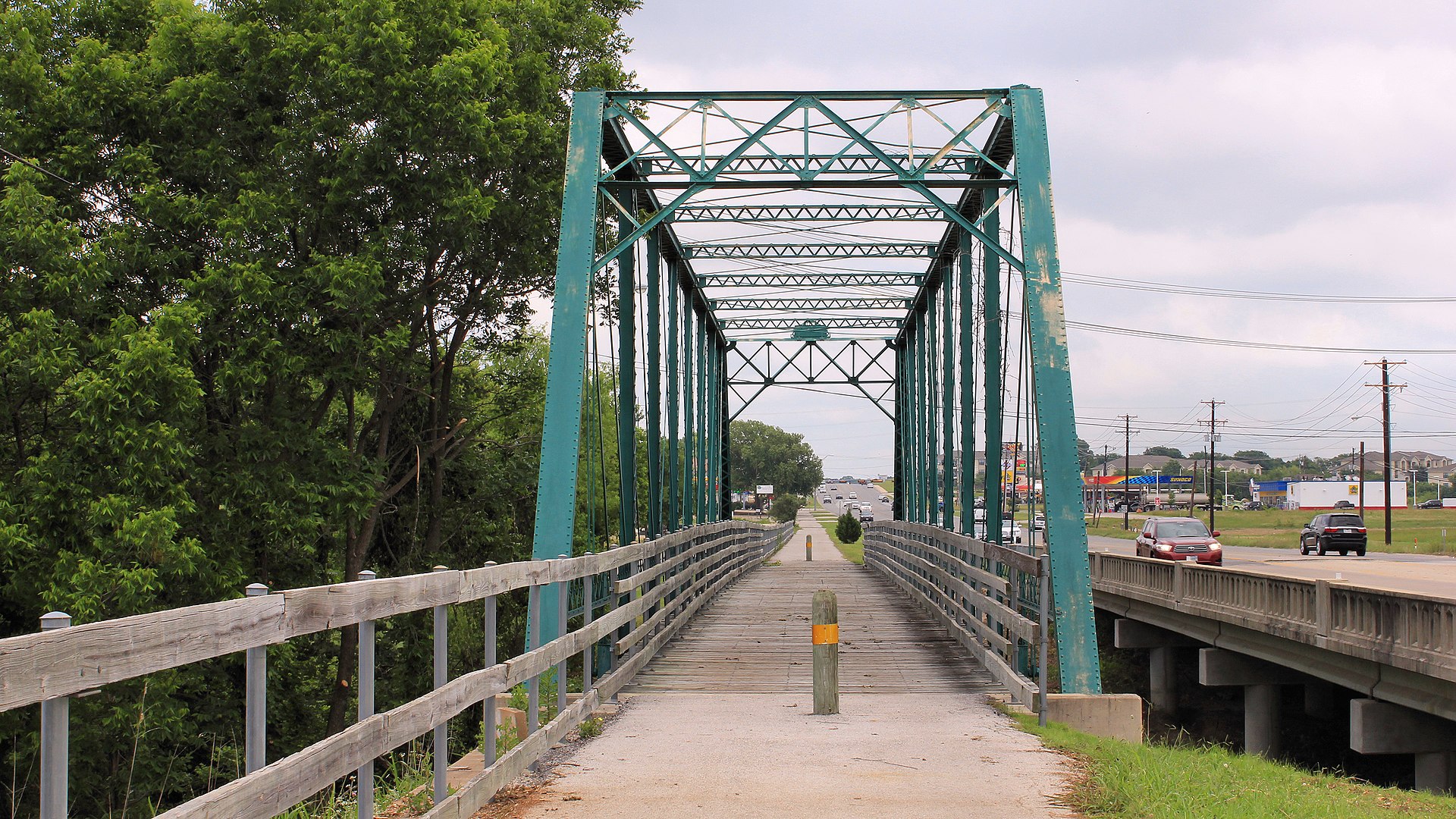
More likely than not, Temple 2040 feels like a city where:
- freight moves faster and more continuously through software-managed corridors,
- hospitals and clinics depend on AI-heavy administrative and diagnostic systems,
- more industrial land is defined by substations, backup power, data halls, and support contractors,
- water and electricity become more political because more sectors depend on them at larger scale,
- local businesses that adapt to automation become more resilient, while those that do not fall behind faster than they used to,
- and residents become less interested in whether Temple is high-tech than in whether it still feels governable.
The deepest local question is not whether Temple adopts advanced technology. It will. The real question is whether Temple remains a place where the public can still understand the tradeoffs behind the systems running the city.
If Temple can build that kind of civic clarity, 2040 could feel more capable without feeling unrecognizable. If it cannot, the future may arrive anyway. It will just arrive as infrastructure other people understand better than the residents living next to it.
Sources
- International Energy Agency, Energy and AI (April 10, 2025)
- ERCOT, Large Load Integration / Batch Zero process for loads of 75 MW or greater
- MySA, "Massive $197M data center in development near I-35 in Central Texas" (December 17, 2025)
- San Antonio Express-News, "Denver company building $900M hyperscale data center west of San Antonio" (August 15, 2025)
- The Verge, "iPhones are on the menu for Amazon drone delivery"
- The Wall Street Journal, "Texas Highways Have a New Nighttime Creature: Autonomous Trucks"
Image credits: Temple photos are from the existing local Temple image bank tracked in the Pheorix image credit files.